Synchronizing Reward Escalation Sequences With Payment Authentication Cycles Across Gaming Applications
Written by Katja Richter · Aug 14, 2026
Synchronizing Reward Escalation Sequences With Payment Authentication Cycles Across Gaming Applications
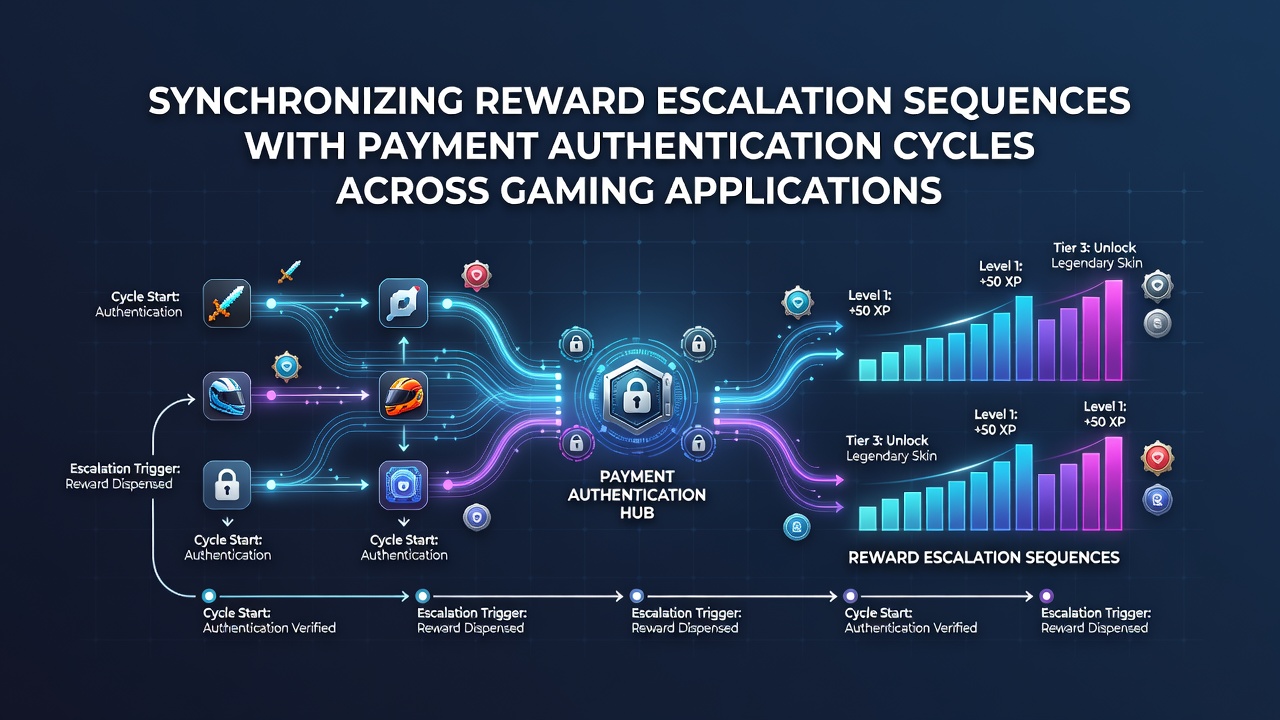
Developers in the gaming sector have refined systems that align reward escalation sequences directly with payment authentication cycles, creating structured flows where in-app purchases trigger verified progressions in player accounts. These mechanisms operate across mobile platforms and desktop environments, using layered verification steps that confirm transaction integrity before unlocking escalating tiers of virtual items or experience multipliers. Data from industry reports indicate that such synchronization reduces discrepancies between payment records and reward distribution by integrating real-time checks at each stage of the cycle.
Mechanics of Reward Escalation Sequences
Reward escalation sequences function through progressive algorithms that increase the value or rarity of benefits as players advance, often scaling from basic currency rewards to complex bundles that include exclusive content or status indicators. Researchers have documented how these sequences rely on backend databases that log cumulative activity, then apply conditional thresholds to release higher levels only after specific criteria are met. In practice, a player completing initial tasks receives modest increments, while sustained engagement combined with authenticated payments activates accelerated paths toward premium unlocks.
Observers note that gaming applications frequently embed these sequences within event-based frameworks, where seasonal updates or limited-time challenges reset or amplify the progression ladders. Figures from mobile analytics platforms reveal that synchronized systems maintain consistent update rates, preventing overlaps that could lead to duplicate rewards or stalled accounts during high-traffic periods in August 2026.
Payment Authentication Cycles in Gaming Environments
Payment authentication cycles encompass the sequence of validation steps that confirm user identity, process transaction details, and secure fund transfers before any value reaches the game server. These cycles incorporate tokenization methods and multi-factor confirmations drawn from established protocols, ensuring that each purchase attempt matches registered account parameters. Experts have mapped these cycles to include initial authorization requests, risk scoring based on behavioral patterns, and final settlement confirmations that feed directly into reward distribution engines.
Industry data shows integration points where authentication outcomes dictate whether reward sequences proceed or enter review queues, particularly in applications handling cross-border transactions. Regulatory bodies such as the Australian Competition and Consumer Commission have outlined standards for digital payment transparency that gaming developers reference when structuring these cycles. The process maintains audit trails that link each authenticated payment to corresponding reward events, supporting compliance across different jurisdictions.
Integration Strategies Across Platforms
Developers achieve synchronization by deploying middleware layers that translate authentication results into triggers for reward engines, allowing seamless escalation without manual intervention. One documented approach involves event-driven architectures where payment success signals initiate database queries that calculate and apply the next tier in the sequence. Studies from research institutions indicate that this method supports scalability in applications serving millions of concurrent users, with latency metrics remaining under defined thresholds during peak hours.
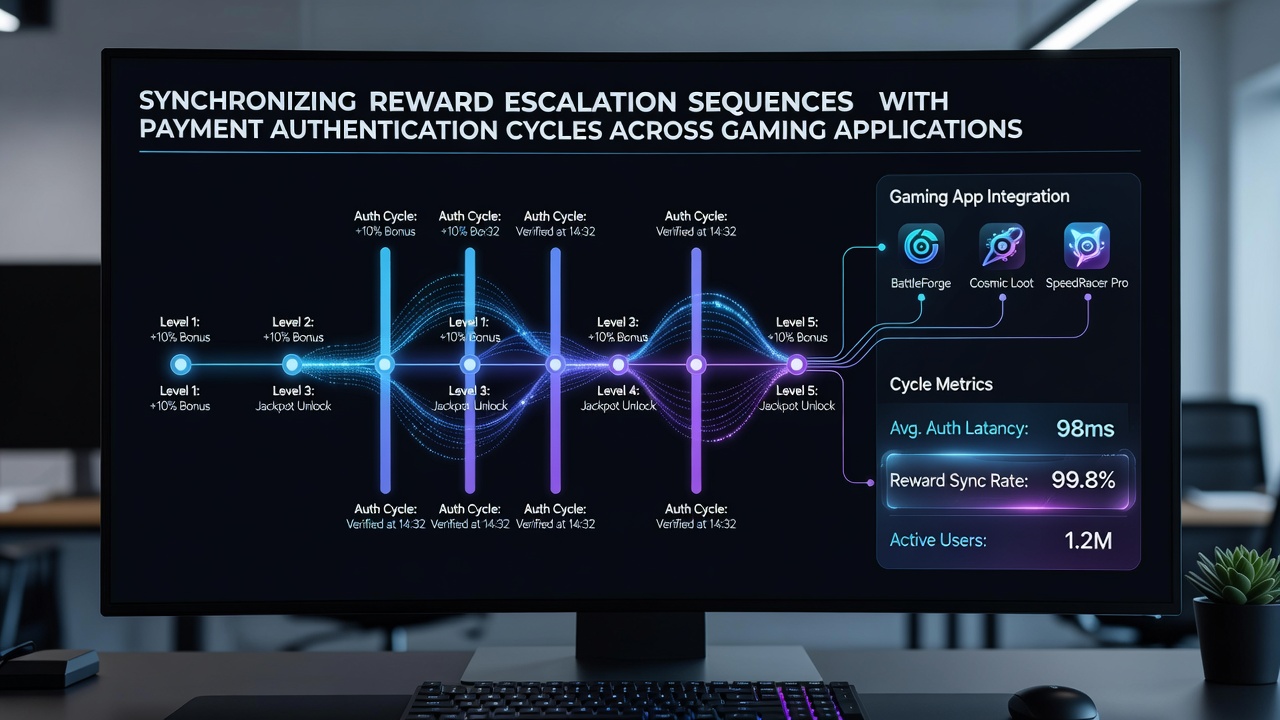
Those who have examined implementation cases point to modular designs that accommodate various payment providers while preserving uniform reward logic. Applications often route authentication data through secure APIs that interface with reward servers, applying filters to block progression if verification flags appear. This setup has been observed in both free-to-play titles and premium experiences, where the timing of reward releases aligns precisely with cycle completions to maintain player progression continuity.
Technical Considerations and Data Handling
Technical frameworks supporting these synchronized operations prioritize data consistency through distributed ledger elements or centralized logging systems that record every authentication event alongside reward adjustments. Analysts report that encryption standards applied during cycle execution protect sensitive information while permitting the reward sequence to advance in real time. Patterns identified in 2026 deployments show increased adoption of adaptive algorithms that adjust escalation rates based on verified payment velocity, reducing instances of mismatched account states.
According to findings from the Entertainment Software Association, gaming applications incorporating these alignments demonstrate measurable improvements in transaction success rates when tested against simulated high-volume scenarios. The approach extends to console and cloud-based environments, where cross-device synchronization ensures that reward progress remains intact regardless of the access point used for payment completion.
Conclusion
Synchronization of reward escalation sequences with payment authentication cycles continues to evolve through iterative updates that incorporate new security protocols and platform requirements. Organizations tracking these developments report ongoing refinements in how gaming applications manage the interplay between verified transactions and progressive benefits, supporting stable operations across diverse user bases. These systems reflect established practices in digital transaction handling adapted specifically for interactive entertainment environments.