Navigating Cryptocurrency Integration Patterns Across Secure Transaction Layers in Portable Interactive Table Environments
Written by Katja Richter · Aug 26, 2026

Navigating Cryptocurrency Integration Patterns Across Secure Transaction Layers in Portable Interactive Table Environments
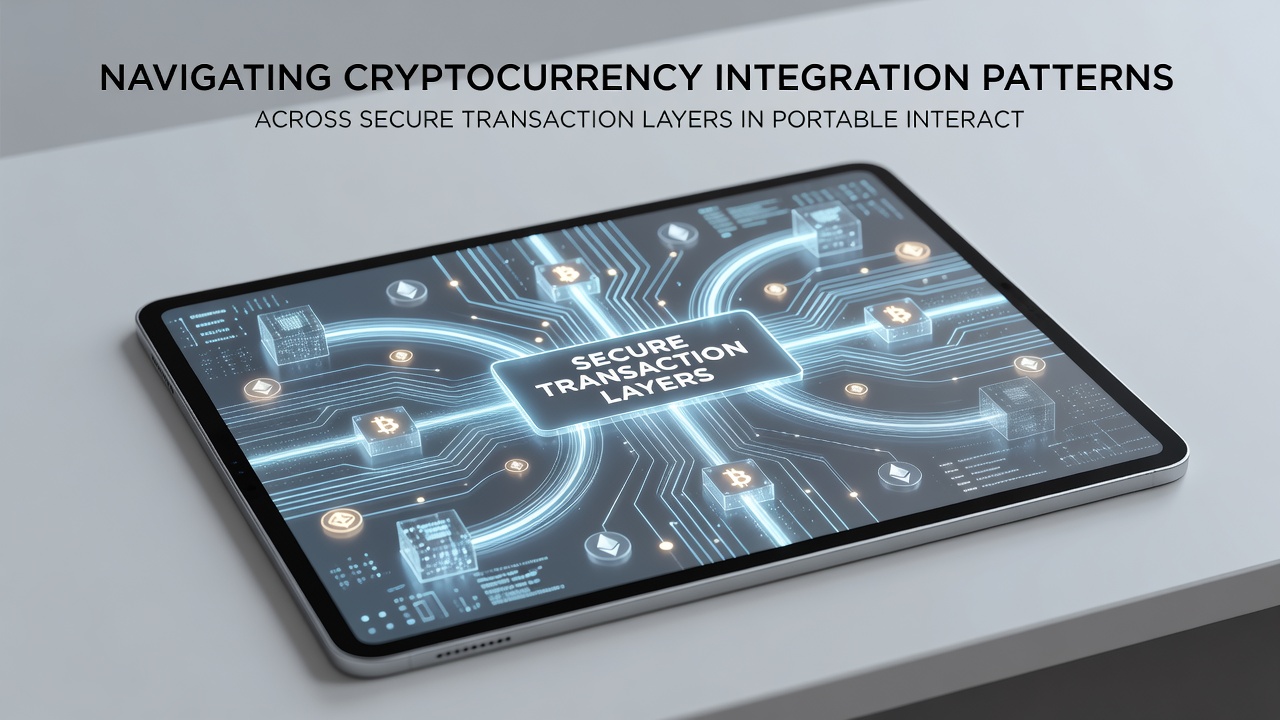
Portable interactive table environments rely on layered security architectures that support cryptocurrency transactions while maintaining device mobility and real-time responsiveness, and researchers have mapped distinct integration patterns that separate concerns across protocol, network, and application tiers.
These patterns emerged as operators adapted blockchain protocols to the constraints of handheld hardware, where processing power and battery life limit the depth of on-device verification, so systems often delegate consensus tasks to offsite nodes while retaining lightweight validation routines locally.
Protocol Layer Patterns
At the protocol level, integration follows a hybrid model in which public ledgers handle final settlement and private sidechains manage interim state updates, and this separation reduces latency during live table interactions on portable devices. Data from industry implementations in August 2026 shows that sidechain batching cut average confirmation times from 12 seconds to under three seconds on tablets running standard operating systems.
Smart contract templates used in these environments incorporate modular access controls that distinguish between player-initiated transfers and dealer-triggered payouts, allowing the same contract logic to serve multiple table formats without exposing full wallet keys to the mobile client.
Network and Device Security Layers
Network security layers incorporate multi-factor device attestation that combines hardware identifiers with cryptographic signatures generated at each session start, and this approach prevents replay attacks across intermittent connections typical of mobile casino floors. Observers note that portable environments often route traffic through dedicated VPN overlays before reaching blockchain endpoints, which adds an extra encryption hop without measurably affecting frame rates during interactive play.
Key management follows a threshold signature scheme distributed between the device secure enclave and a remote custodian service, so no single party holds a complete private key at any moment. Studies conducted by the National Institute of Standards and Technology have documented reduced key exposure incidents in deployments that adopted this split after 2025.
Transaction Verification Flows
Transaction verification flows in portable table environments sequence checks across three stages: immediate signature validation on the device, batch Merkle proof submission to the sidechain, and periodic full ledger reconciliation with the main chain. This staged process keeps gameplay uninterrupted while still achieving regulatory auditability required by multiple jurisdictions.
Payment channel techniques adapted from earlier lightning-style networks now support table-specific micro-payments that settle only when a player leaves the session or reaches a predefined threshold, and operators report that channel capacity limits have been raised to accommodate higher-value baccarat and poker rounds without forcing early closures.
Cross-Platform Compatibility Considerations
Cross-platform compatibility has driven adoption of standardized APIs that abstract cryptocurrency operations behind common gaming SDK calls, allowing developers to target both iOS and Android tablets with identical business logic. Regulatory filings submitted to Canadian authorities in mid-2026 indicate that these abstracted layers simplified compliance reporting by consolidating transaction logs into single export formats accepted by provincial gaming commissions.
Interoperability testing conducted by academic teams at the University of Melbourne revealed that certain elliptic curve choices performed better on ARM-based portable hardware than others, prompting several vendors to migrate their mobile clients to secp256k1 variants optimized for lower power draw during signature generation.
Conclusion
Patterns of cryptocurrency integration across secure transaction layers continue to evolve in response to hardware constraints and regulatory demands in portable interactive table environments, and current implementations demonstrate that layered separation of protocol, network, and verification functions can support both mobility and audit requirements simultaneously. Further refinements are expected as new device attestation standards and sidechain protocols reach wider deployment.