How Geographic Player Distributions Affect Strategy Adaptations in Digital Roulette Environments
Written by Morgan Krause · Aug 16, 2026

How Geographic Player Distributions Affect Strategy Adaptations in Digital Roulette Environments
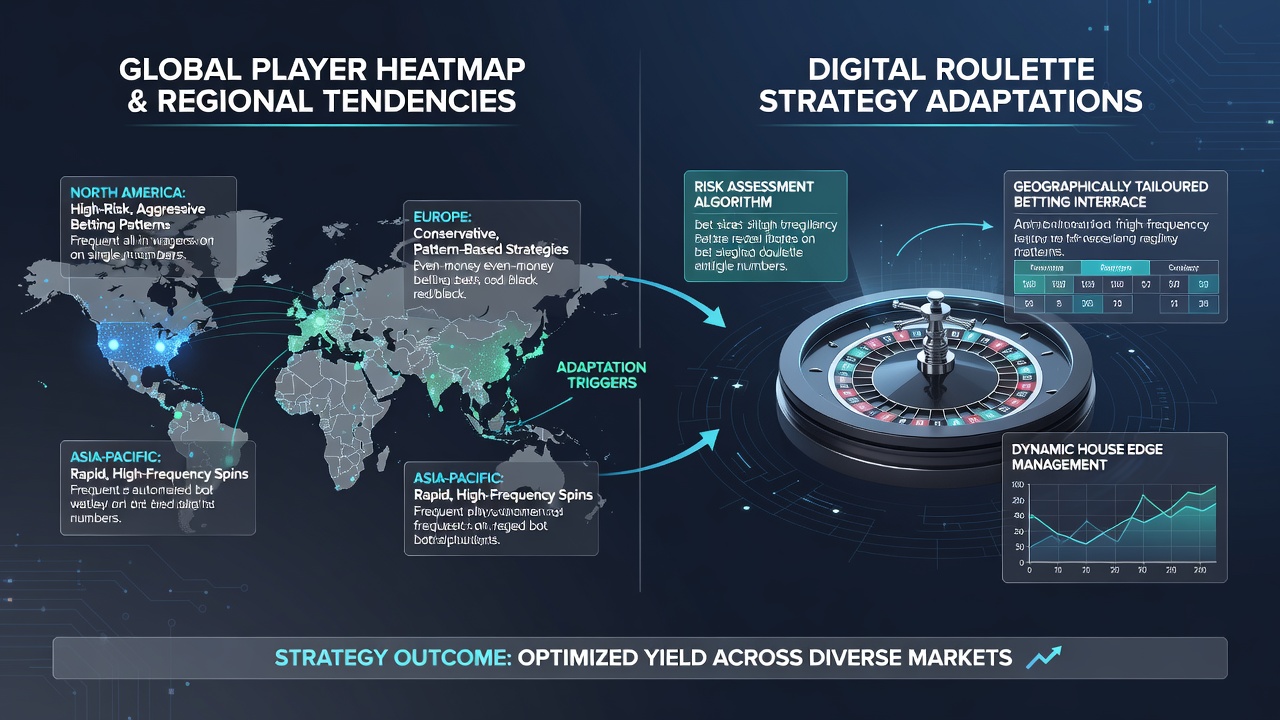
Digital roulette platforms track player origins through IP data and account registrations, revealing distinct geographic clusters that shape how operators adjust game parameters and betting interfaces. In August 2026, reports from the European Gaming and Betting Association highlighted that European players concentrated in Western and Northern regions accounted for roughly 38 percent of total session volume on major sites, prompting developers to prioritize French and European wheel variants with lower house edges during peak evening hours in those time zones.
Regional Clustering and Betting Pattern Shifts
Players from East Asia often cluster around high-volume tables that support rapid spin cycles, while those connecting from North America show preferences for American double-zero wheels during afternoon windows. Data from the Nevada Gaming Control Board indicates that cross-border traffic from Canadian provinces increased by 22 percent year-over-year in the first half of 2026, leading platforms to introduce localized stake limits and auto-adjust betting timers to accommodate slower connection speeds common in rural areas. Observers note that these distributions force real-time algorithm tweaks, such as expanding neighbor-bet options for clusters showing repeated straight-up wagers.
European Player Concentrations
Western European accounts dominate sessions on platforms offering La Partage rules, and servers in this segment frequently adapt by increasing the frequency of announced bets when traffic spikes from Germany and France coincide. Research from the University of Macau's gaming studies unit found that Mediterranean players tend toward column and dozen bets at higher volumes than Nordic counterparts, prompting operators to bundle these selections into quick-select interfaces during coordinated evening peaks across multiple time zones.
Platforms respond by monitoring latency patterns tied to specific regions and then throttling spin animations for users in high-density zones to maintain fairness across all connected devices. This adjustment becomes especially relevant when Asian and European clusters overlap during early morning hours in Europe, creating mixed-traffic environments where strategy engines must balance speed and rule variants simultaneously.
North American and Oceanic Influences
North American players generate distinct demand spikes for multi-wheel formats, and operators in August 2026 began routing these sessions through dedicated servers equipped with enhanced random number generators calibrated for higher concurrency. Australian regulatory summaries released that same month documented a 15 percent rise in mobile roulette participation from Oceania, which in turn influenced several international platforms to add progressive jackpot overlays that activate only when sufficient players from that region log in together. Those who've studied transaction logs report that such geographic filtering reduces average session length variance by aligning payout structures with observed risk tolerances.
Canadian provinces contribute steady traffic to tables featuring inside-bet heavy layouts, and platforms adapt by surfacing historical outcome charts that highlight recent number clusters when users from these areas join. The resulting strategy shifts include dynamic minimum bet escalations during periods when multiple continents feed into the same virtual table, preventing dilution of house-edge calculations across diverse player pools.
Algorithmic Responses to Distribution Density
High-density player zones trigger automated changes in wheel bias simulation settings, while sparse regions receive simplified interfaces that reduce cognitive load for occasional users. Studies compiled by the Asia Pacific Association of Gaming Regulators show that Southeast Asian clusters favor even-money bets during monsoon-related connectivity disruptions, leading operators to pre-load compensation mechanisms such as extended insurance options on red-black wagers. These adaptations maintain engagement levels without altering core probability structures.
Real-time mapping of player origins also informs the deployment of localized chat moderators and language-specific strategy guides that appear when certain thresholds of regional participation are crossed. In practice, this means a table dominated by South American accounts might surface Spanish-language payout tables, whereas the same table later populated by Eastern European users receives Cyrillic support instead.
Conclusion
Geographic player distributions continue to drive measurable changes in digital roulette environments, with operators relying on location-derived data to refine everything from wheel variants and bet timers to interface language and server allocation. As August 2026 figures demonstrate, these adaptations remain tied to observable traffic patterns rather than static design choices, allowing platforms to sustain consistent play conditions across widening global audiences.