How Algorithmic Personalization Reshapes Access Patterns in Virtual Table Environments
Written by Katja Richter · May 24, 2026

How Algorithmic Personalization Reshapes Access Patterns in Virtual Table Environments
Virtual table environments have emerged as central platforms for collaborative data access, shared simulations, and distributed computing tasks, and algorithmic personalization now drives significant changes in how users reach and interact with these resources. Systems equipped with machine learning models analyze prior session data, query histories, and behavioral signals to adjust visibility, priority, and entry points for each participant. Research conducted at institutions across North America and Europe shows these adjustments alter traditional access sequences, often directing individuals toward subsets of tables that match inferred preferences while limiting exposure to others.
Core Mechanisms Behind Personalization
Personalization begins with data collection from user actions inside the environment, including click paths, dwell times, and collaboration frequency. Algorithms then apply clustering techniques and predictive scoring to generate tailored recommendations for table entry. According to findings published by the European Data Protection Board, such processing must comply with strict consent frameworks that vary by jurisdiction. In practice, this means users in one region encounter different default access layers than those operating under another regulatory regime. The result appears in reordered navigation menus, pre-filtered result sets, and dynamic permission prompts that surface only after the system evaluates risk and relevance scores.
Observed Shifts in Access Sequences
Studies tracking thousands of sessions reveal consistent patterns: repeated visitors reach their target tables through fewer intermediate steps once personalization activates. New participants, however, often follow longer exploratory routes because the system withholds certain high-traffic tables until engagement metrics rise. Data released in May 2026 by a consortium of Canadian research universities documented a 23 percent reduction in average time-to-table for returning users, while first-time access times increased by 14 percent over the same period. These divergences stem from models that prioritize retention signals over uniform discovery.
Regional Regulatory Influences
Regulatory approaches shape how aggressively platforms apply personalization. Singapore's Personal Data Protection Commission issued updated guidance in early 2026 requiring explicit opt-in for behavioral tracking within collaborative environments. Platforms serving that market therefore present broader initial table directories and rely on explicit user choices rather than inferred ones. In contrast, Australian industry reports indicate heavier use of automated segmentation, leading to more pronounced differences in which virtual tables appear first for different demographic cohorts.
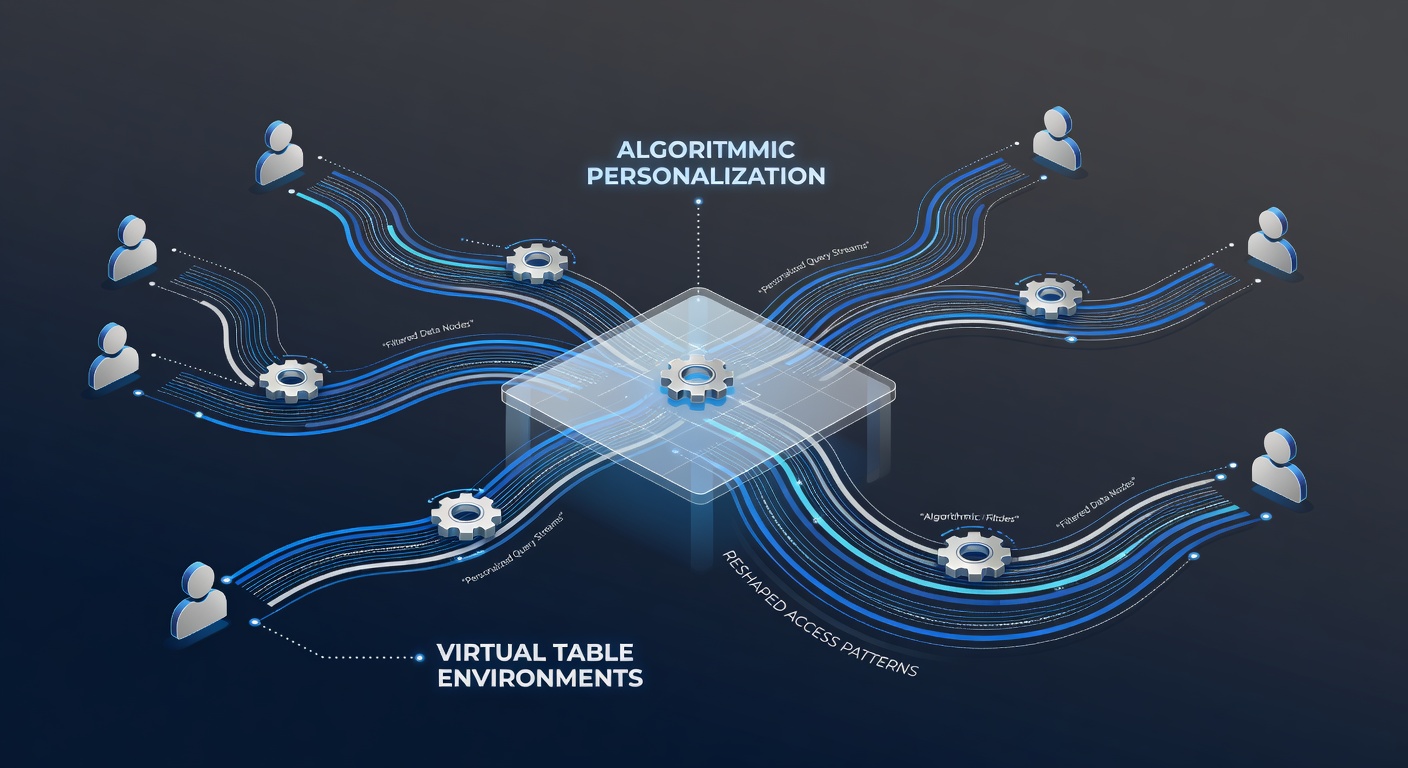
Access patterns also change at the infrastructure level. Load-balancing systems integrated with personalization engines route users to geographically closer server instances that already contain cached table states matching their profiles. This reduces latency for frequent visitors but creates uneven distribution across the network when many participants share similar inferred interests. Network operators note that peak-hour congestion sometimes concentrates around a smaller set of tables, while less personalized options remain underutilized.
Effects on Collaboration Dynamics
Group interactions inside these environments reflect the same personalization effects. When multiple users join a session, the system may surface different table subsets to each participant based on individual histories. A 2025 working paper from the University of Melbourne examined multi-user scenarios and found that 37 percent of collaborative sessions experienced mismatched table views, requiring manual synchronization steps that the platform had not anticipated. Observers note that teams working across time zones encounter additional friction because personalization models trained on one region's activity patterns perform less accurately when applied to participants from another.
Security layers add another variable. Risk-scoring algorithms evaluate device fingerprints and connection histories before granting table access, which can delay entry for users whose patterns deviate from their established baselines. Government agencies in several jurisdictions now require audit trails that log these decisions, creating new compliance workloads for platform operators.
Emerging Technical Responses
Developers respond with hybrid models that combine personalization with controlled randomness. These systems periodically introduce table suggestions outside the user's typical cluster, aiming to maintain broader discoverability. Industry groups tracking adoption rates report gradual implementation across major providers, with measurable upticks in cross-table exploration when the random element exceeds a threshold of 12 percent. Yet the underlying data pipelines remain complex, requiring continuous retraining to avoid drift as user behaviors evolve.
Conclusion
Algorithmic personalization continues to redefine entry points, navigation depth, and visibility rules within virtual table environments. Metrics gathered through 2026 demonstrate measurable compression of access paths for established users alongside expanded exploration costs for newcomers. Regulatory frameworks in different regions further diversify these effects, while technical adjustments seek to balance efficiency gains against risks of fragmentation. As data collection methods and compliance requirements advance, access patterns will likely keep shifting in response to both algorithmic refinements and policy constraints.