Cultural Influences on Preferred Payment Options Within Global Online Gaming Communities
Written by Cameron Krause · Jul 8, 2026
Cultural Influences on Preferred Payment Options Within Global Online Gaming Communities
Payment preferences in online gaming communities reflect deep cultural, regulatory, and infrastructural patterns that vary sharply by region, and observers tracking these trends note consistent divergences rather than uniform global adoption, with data from mid-2026 showing continued regional specialization even as cross-border platforms expand.
Payment Patterns Across Major Regions
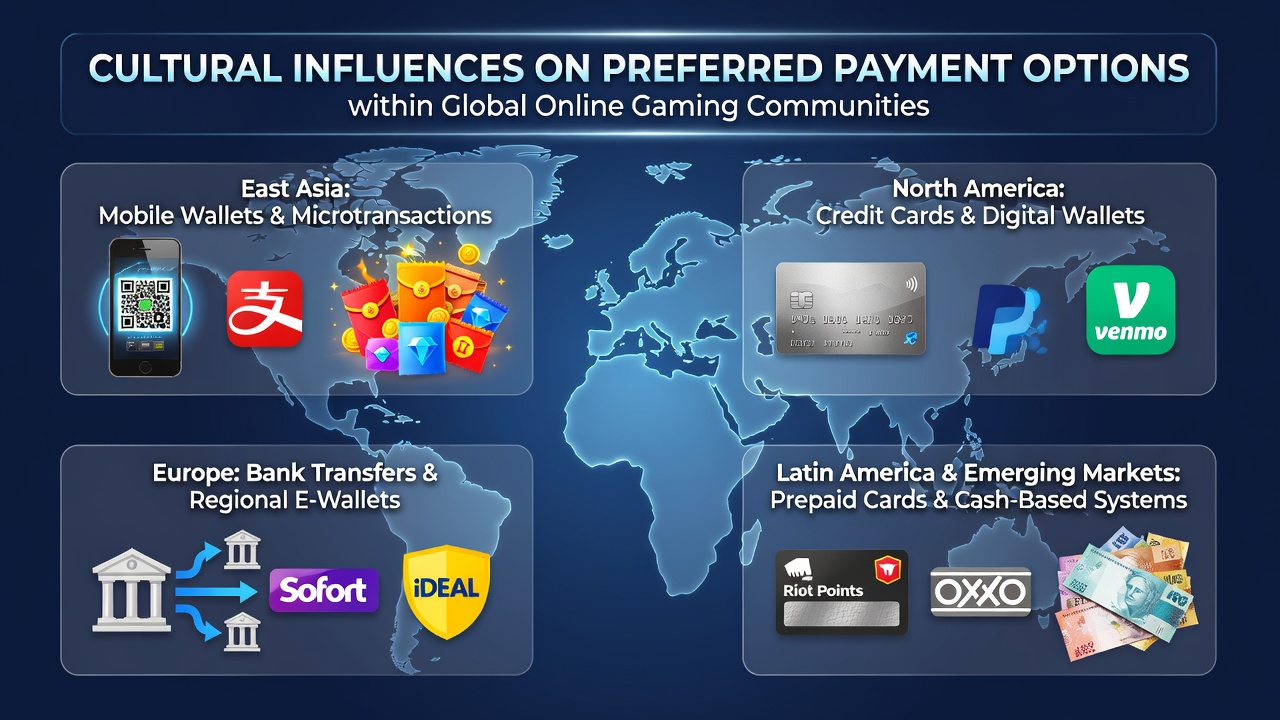
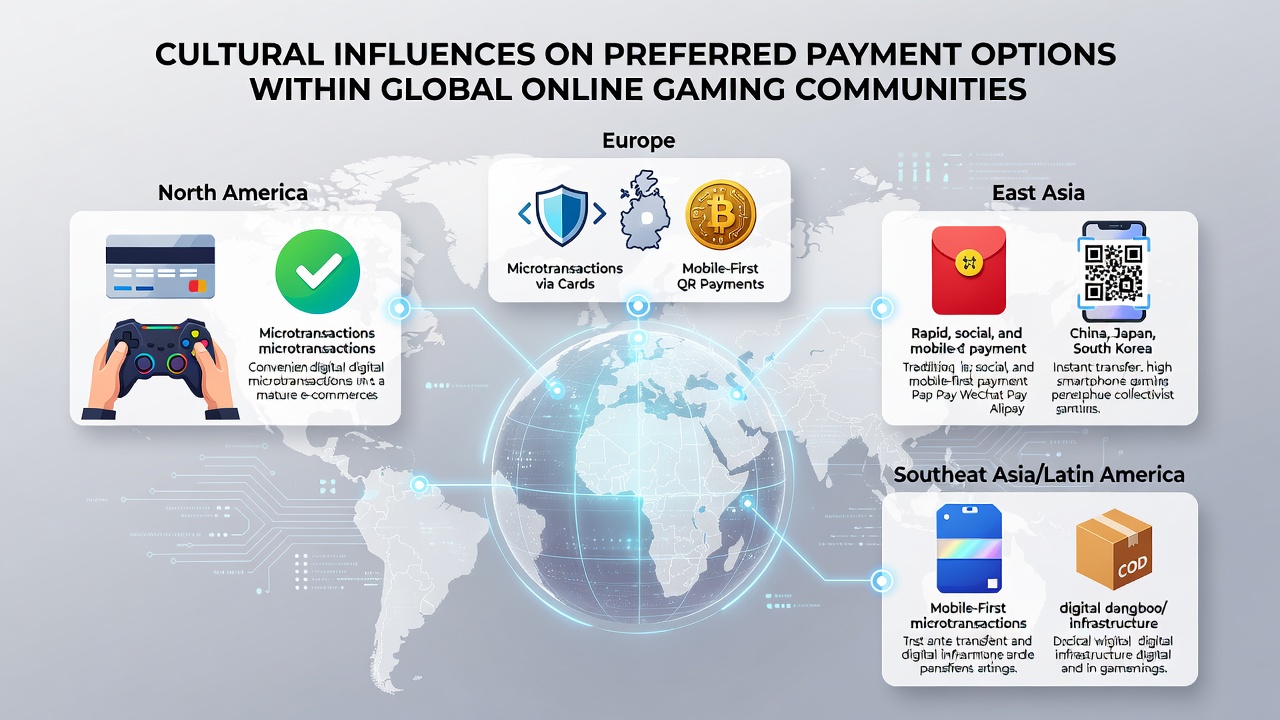
Communities in East Asia demonstrate strong integration with domestic digital wallets that tie directly into everyday financial ecosystems, where Chinese players routinely complete in-game purchases through Alipay and WeChat Pay because these platforms already handle most daily transactions and offer seamless social features that extend into gaming environments. Japanese gamers often favor convenience store payments and carrier billing tied to services like PayPay, reflecting long-standing habits around cash and mobile carrier ecosystems rather than credit card dominance. South Korean players show high adoption of local services such as KakaoPay, which connects to the country's dense social app infrastructure and supports rapid microtransactions common in competitive titles.
European communities rely more on established bank transfers, credit cards, and regional systems like SEPA direct debits, with players in Germany and the Netherlands frequently choosing direct bank links that align with consumer protection standards embedded in national regulations. French and Italian gamers incorporate PayPal at higher rates for its buyer protections, while data released in July 2026 from industry tracking groups indicated that these preferences held steady despite platform pushes toward unified checkout flows.
North American scenes lean toward credit cards and digital wallets like Apple Pay and Google Pay, with Canadian players additionally using Interac e-Transfer for its direct bank connections. In Latin American markets, Brazilian communities favor Boleto bancário for its accessibility without requiring traditional banking relationships, whereas Mexican players combine cards with local wallet options that accommodate variable internet access and regulatory environments.
Infrastructure and Regulatory Drivers
Payment infrastructure shapes these patterns because countries with high mobile penetration and government-backed digital systems see faster adoption of integrated wallets, while regions with fragmented banking see reliance on cash-equivalent methods or carrier billing. Regulatory frameworks further reinforce choices, as data protection rules in the European Union encourage use of established intermediaries, and licensing requirements in parts of Asia prioritize platforms that comply with local financial controls.
Observers tracking July 2026 updates note that emerging markets in Southeast Asia and Africa continue blending mobile money services with gaming platforms, where Kenyan communities utilize M-Pesa for its widespread acceptance and low barriers, and Indonesian players combine bank transfers with e-wallets that handle both local currency volatility and international game servers.
Trust dynamics play a measurable role, with communities in regions that experienced past financial instability showing stronger preference for methods offering immediate confirmation and minimal data sharing. Privacy norms influence selections as well, leading some groups to avoid credit cards that link directly to personal financial histories in favor of prepaid or anonymous options where regulations permit.
Social and Economic Influences on Choices
Social structures within gaming communities amplify these preferences through peer recommendations and shared experiences, where players in tight-knit regional servers exchange advice on reliable methods that avoid transaction delays during limited-time events. Economic factors intersect with culture when currency controls or transaction fees make certain international options less viable, prompting communities to develop workarounds that stay within approved local channels.
Research from the Innovation, Science and Economic Development Canada highlights how bilingual and multicultural player bases within single countries still maintain distinct subgroup preferences that mirror broader ethnic and linguistic divisions. Academic analyses from institutions in the Asia-Pacific region similarly document how historical payment habits carry over into digital spaces even among younger demographics raised entirely on smartphones.
Platform operators respond to these patterns by offering localized checkout options rather than forcing single global standards, and figures from 2026 tracking reports reveal that games with flexible payment menus retain higher engagement across borders compared to those with rigid systems.
Conclusion
Cultural influences on payment options within global online gaming communities produce distinct regional profiles that persist amid technological convergence, driven by combinations of existing financial infrastructure, regulatory environments, trust patterns, and social norms that researchers continue to document through ongoing data collection. These preferences evolve slowly because they connect to broader societal relationships with money and technology rather than shifting rapidly with individual platform updates.