Cross-Game Progression Mechanics Reshaping Reward Pathways in Licensed Digital Table Environments
Written by Cameron Krause · Aug 29, 2026
Cross-Game Progression Mechanics Reshaping Reward Pathways in Licensed Digital Table Environments
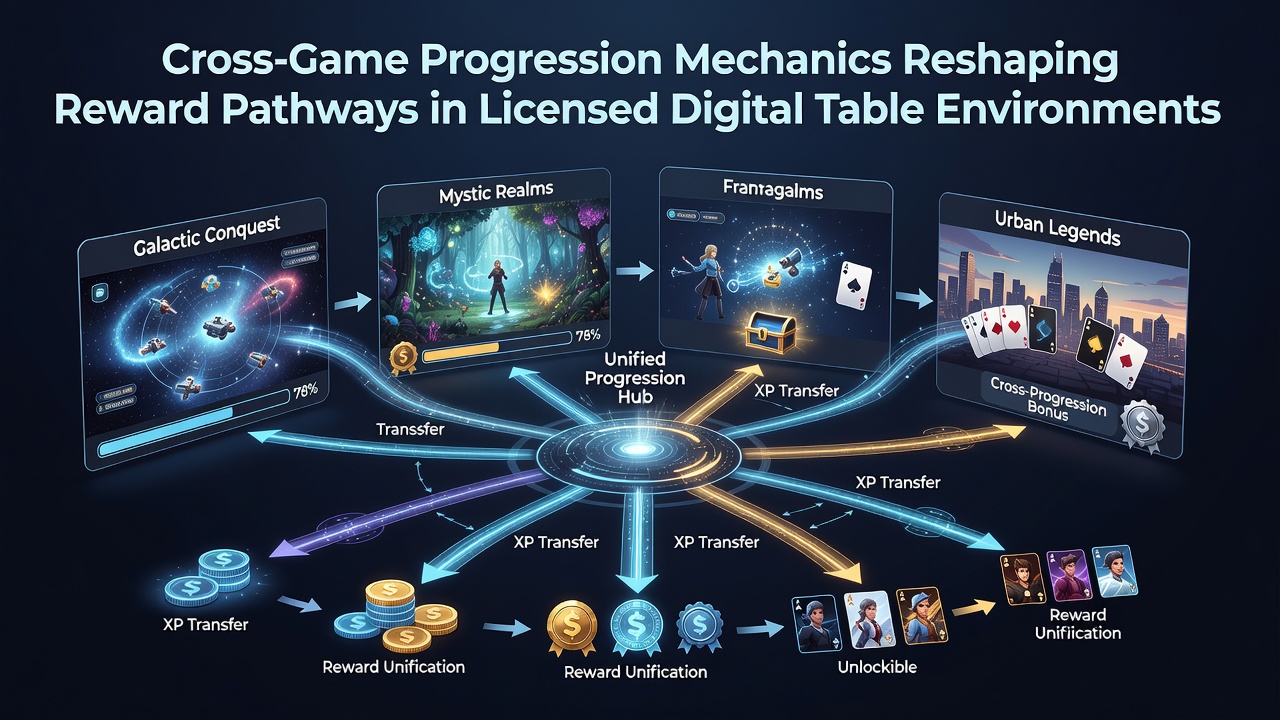
Cross-game progression systems now link player activity across multiple table formats in licensed digital environments, allowing points earned in one game to influence reward tiers in others. These mechanics emerged prominently in regulated markets where operators integrate loyalty frameworks with real-time data tracking, and they continue to expand through 2026 as platforms refine their backend architectures.
Mechanics Driving Interconnected Rewards
Players accumulate unified progression metrics that carry over from blackjack sessions into roulette or poker environments, often through shared experience systems or tiered loyalty ladders. A single hand of digital blackjack might contribute toward a multiplier that applies later during a roulette spin sequence, while poker hand histories feed into the same pool of redeemable assets. Licensed operators implement these links under strict compliance rules, logging every transfer through audited servers to maintain transparency with regulatory oversight bodies.
Data from the New Jersey Division of Gaming Enforcement shows steady growth in multi-game engagement metrics through the first half of 2026, with platforms reporting higher session continuity when progression elements bridge different table types. Operators adjust algorithms quarterly to balance reward distribution, preventing any single game from dominating the overall pathway.
Platform Implementation Patterns Observed in 2026
Licensed environments deploy these systems through modular APIs that connect disparate game engines while preserving individual rulesets. One common structure assigns base points per wager, then applies modifiers based on game-specific volatility; another uses milestone achievements that unlock cross-title bonuses after players reach thresholds in at least two distinct table games. These approaches appear across both desktop and mobile interfaces, with synchronization occurring in real time rather than through delayed batch processing.
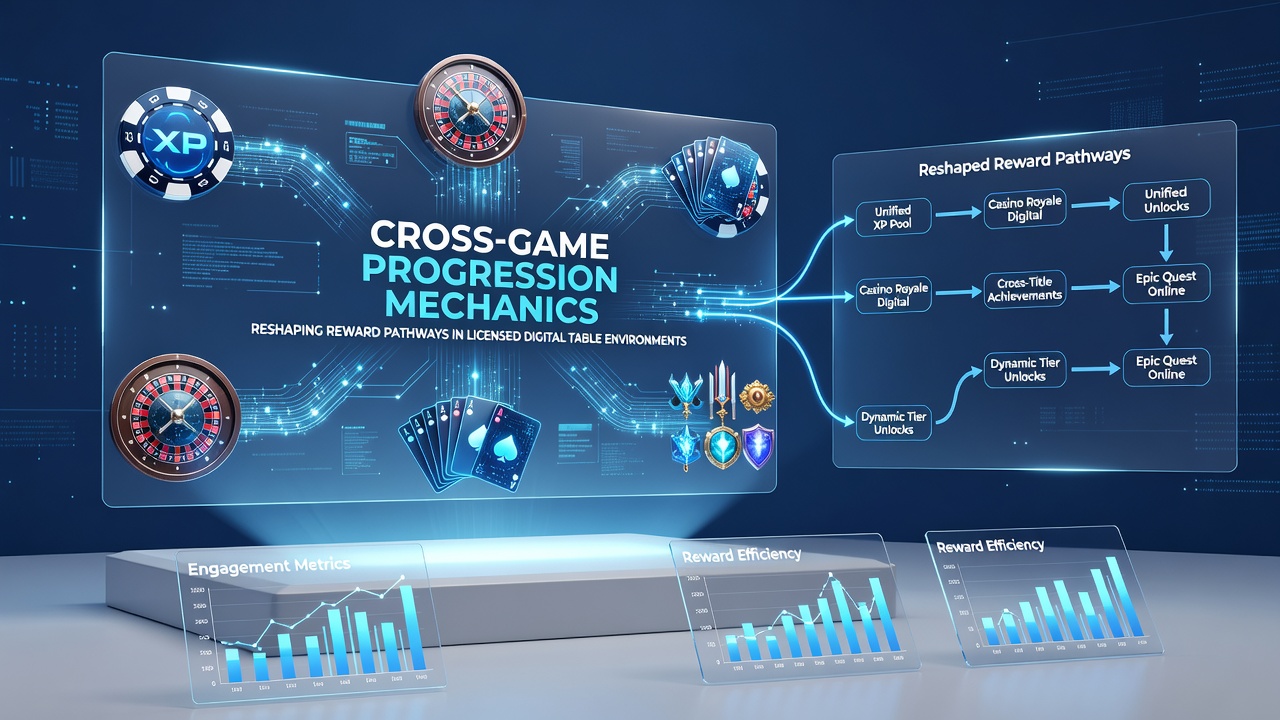
August 2026 updates from several major platforms introduced refined decay rates for inactive progression points, ensuring that prolonged breaks between sessions do not erase accumulated value entirely. Instead, partial retention mechanisms keep pathways viable while encouraging periodic returns. Regulatory filings indicate that these adjustments followed internal testing periods lasting several months, with operators submitting compliance documentation prior to rollout.
Effects on Player Behavior and Retention Data
Studies conducted by the University of Nevada, Las Vegas gaming research group document shifts in session length and game-switching frequency once cross-game elements activate. Participants tend to explore secondary table formats more readily when rewards remain portable, and average time between logins decreases in environments that display unified progress bars. Figures released by iGaming Ontario for the second quarter of 2026 reflect similar patterns, noting increased cross-title activity among verified accounts compared with earlier periods that lacked integrated progression.
Operators monitor these trends through anonymized datasets that track progression transfers without exposing individual identities. Adjustments to reward scaling occur when certain pathways show disproportionate usage, maintaining equilibrium across the licensed catalog. External audits verify that these recalibrations align with jurisdictional requirements for fair play and responsible gaming disclosures.
Regulatory Frameworks Supporting These Systems
Licensed jurisdictions require detailed reporting on how progression mechanics calculate and distribute value, including formulas that determine point-to-reward conversions. Authorities in multiple regions mandate that players receive clear explanations of transfer rules before participation begins, often through in-platform tooltips or dedicated help sections. Compliance teams review these disclosures during periodic license renewals, cross-referencing them against live transaction logs.
Technical standards also address data security for progression databases, since centralized records now hold information spanning several game categories. Encryption protocols and access controls form part of standard licensing conditions, with breach notification timelines specified in regulatory codes. Platforms that fail these checks face temporary suspension of the affected progression features until remediation occurs.
Conclusion
Cross-game progression continues to evolve within licensed digital table environments as operators refine integration methods and regulators maintain oversight through reporting and audit processes. Available data through August 2026 indicates sustained adoption across compliant platforms, with measurable impacts on how rewards accumulate and transfer between different table formats. These developments remain grounded in technical infrastructure and jurisdictional rules that prioritize verifiable tracking and player transparency.